Family Driving Agreement
PDF · 1 page
A one-page contract between you and your teen. The limits, the expectations, and what happens if a rule gets broken.
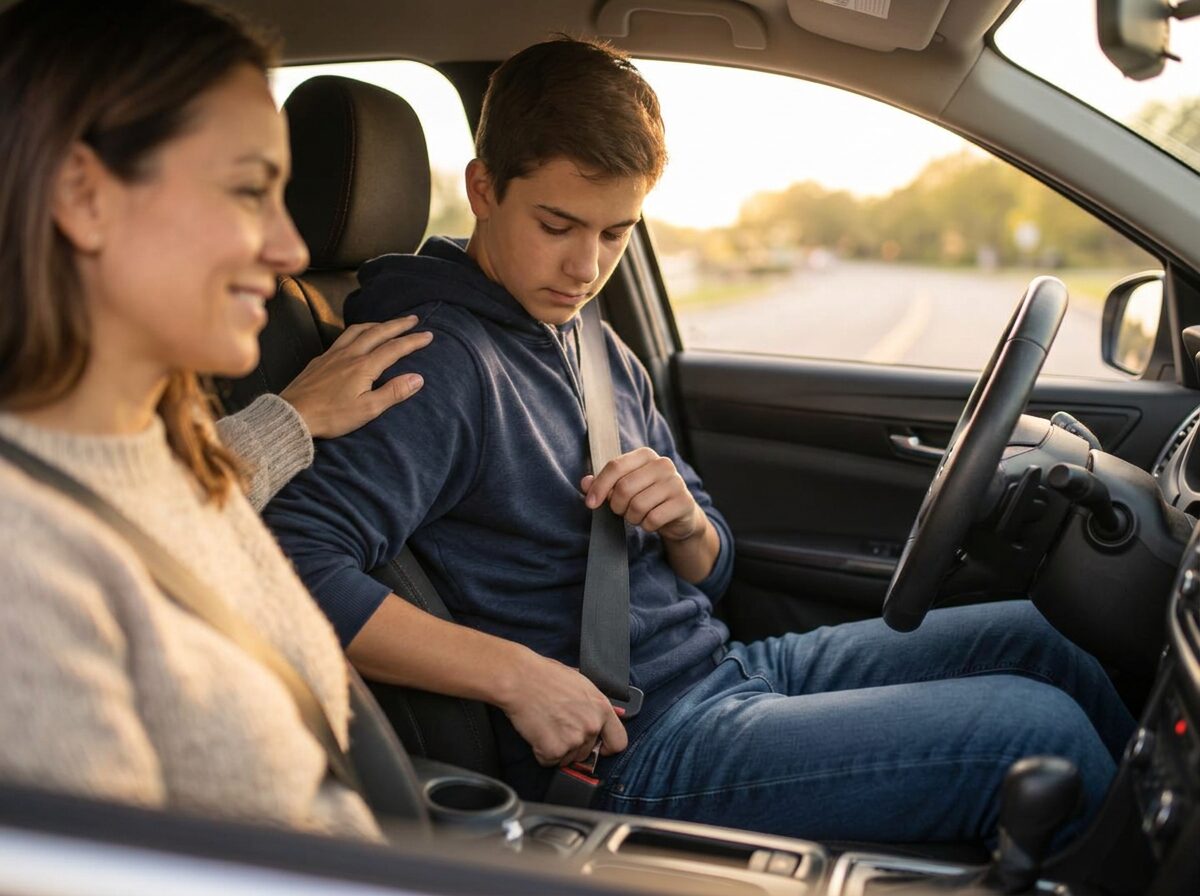
Download the agreementNational Teen Driver Safety Week exists to raise awareness of teen crashes and reduce the injuries and deaths that come with them. It's a good moment to sit down with your teenager and talk honestly about how they drive. Check that the rules you set at home are still being followed. Talk through the risks of driving and the skills they need to work on.
For nearly two decades, the third week of October has been set aside to focus national attention on teen driving. In 2026, it runs from October 18 to 24.
Background
In 2007, a series of crashes killed several Pennsylvania high school students. In response, Congressman Charlie Dent and Senator Bob Casey, joined by more than fifty co-sponsors, introduced the resolution that created National Teen Driver Safety Week that October.
The effort was backed by the Young Driver Safety Research team at Children's Hospital of Philadelphia and by State Farm. CHOP's research — on what actually causes teen crashes and how much parental involvement changes the outcome — still shapes how the week is approached today.
It has run every year since, during the third full week of October.
The Numbers
Crashes are a leading cause of death for American teenagers, and the risk is highest in the first months of driving alone. But the research points somewhere hopeful: teens whose parents stay involved — setting rules, giving feedback, riding along — crash at roughly half the rate of those whose parents don’t.
Most families never hear this. Teen Driver Safety Week exists to make sure the conversation happens.
4×
Higher crash rate per mile driven for 16- to 19-year-olds than for drivers aged 20 and over.
2,162
Drivers aged 15 to 20 killed in crashes in 2024. The highest number in a decade.
53%
Of those young drivers who died were not wearing a seat belt.
16 - 17
The ages at which the risk of a fatal crash is at its highest.
20%
Of young drivers involved in fatal crashes in 2024 were alcohol-impaired.
Half
As likely to crash: teens whose parents set rules and stay involved in a supportive way.
Figures from NHTSA, the Insurance Institute for Highway Safety, and Children’s Hospital of Philadelphia.
Teen Driver Safety Week is a good excuse to do the things that usually get put off. Teens whose parents stay actively involved — during supervised driving and after getting their license — are about half as likely to crash.
Phones, passengers, night driving, seat belts. Say them out loud rather than assuming they're understood — rules your teen can repeat back are the ones that hold. Teens whose parents set and enforce clear rules report fewer risky behaviors and fewer crashes.
Graduated licensing restrictions on nighttime driving and passengers vary by state, and most families don't know theirs exactly. Two minutes to look up, and they're the restrictions your teen is legally held to.
Find your state's rules →Not crashes — the ordinary things. Missing a turn. A driver riding their bumper. Getting tired halfway home. Decide now what the response is, so it's a plan instead of a reaction. Agree on the one that matters most: if they're ever unsafe to drive, they call you, no questions.
Measure where your teen stands between "needs coaching" and "fully independent" with the seven skills behind the Drive Readiness Score™:
Ask your teen to evaluate themselves and compare with your observation. Where your answers differ is what's worth talking through — and practicing on the next few drives.
Rain, after dark, a highway merge, an unfamiliar neighborhood. Crash risk drops with the range of conditions a new driver has experienced. Better they meet it for the first time with you in the passenger seat — so if the weather doesn't cooperate this week, make a list of the conditions you still haven't covered and take the next one that comes along.
Logging hours doesn't automatically build skill — what you practice matters more than how long you practice. These are seven skills that separate new drivers from experienced ones, each with one habit attached so you can start on your next drive. Small practice beats big intentions.
Speed management
Every time you pass a speed limit sign, glance at your speedometer. Over the limit? Ease off. Make the check automatic and you'll never drift without noticing.
Hazard awareness
Before every intersection, parked car, or blind corner, get locked in and look around because you never know what might happen next. Experienced drivers look there before anything happens — that's the whole skill.
Distraction control
No phone while the car is moving. Not at a red light, not for one quick look. Glove box before you start, music and GPS already set.
Space management
See brake lights anywhere ahead — even three cars up — and come off the gas straight away. You buy yourself space before you need it, instead of stamping on the pedal once you do.
Independent decision-making
If you are a beginner driver, this habit is for you. When you drive with your parent or guardian, narrate your calls out loud as you make them. "Seeing the Stop sign and preparing to stop." "Turning left after that car passes." "Merging now." Nobody has to ask you first, and this is how you master your independent decision-making.
Situational adaptability
Rain, construction, or traffic stacking up? Drop 5 mph and double your following distance. Immediately, not once it gets bad.
Emotional regulation
Someone cuts you off and your blood pressure spikes? Loosen your grip, roll your shoulders back, breathe out. Let it go.
Resources
Two things to print and keep.
PDF · 1 page
A one-page contract between you and your teen. The limits, the expectations, and what happens if a rule gets broken.
Download the agreementPDF · 1 page
All seven skills on one page, each with a short description of what it looks like from the passenger seat.
Download the score cardDrivvy empowers parents and teens to build safer driving habits together — helping raise the next generation of responsible drivers.