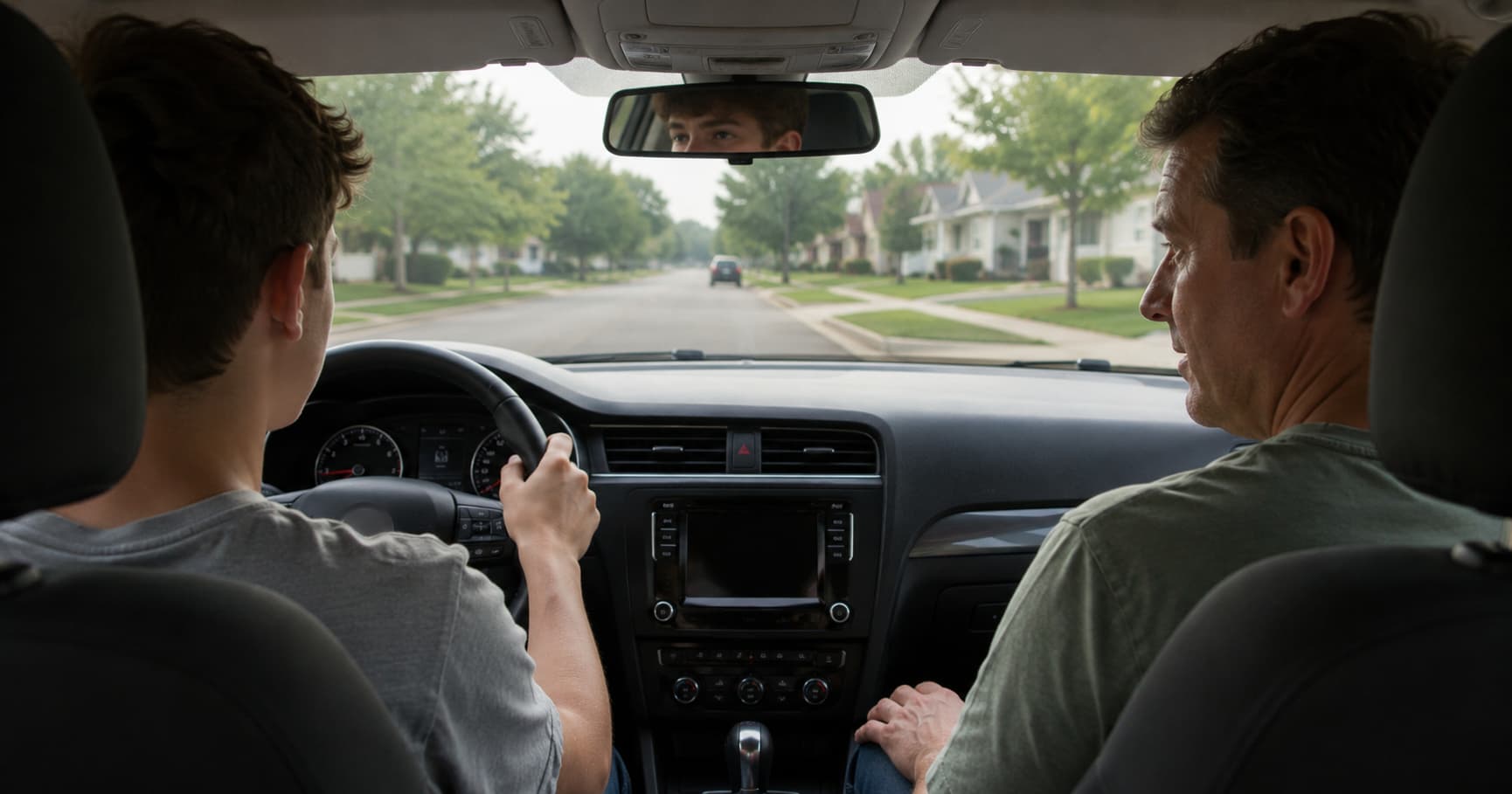
You've told your teen to slow down. Maybe more than once on the same drive. They nod, ease off the gas — and ten minutes later you notice the speedometer creeping up again. It's not defiance. It's not recklessness. It's one of the most consistent patterns in teen driving, and it has a name: poor speed management.
Most parents focus on the obvious dangers — phones, distracted driving, bad weather. Speed tends to feel like a rule problem — either your teen follows the limit or they don't. That framing makes it feel simpler than it is. And once you understand what's actually happening when your teen struggles to regulate speed, the way you coach it changes completely.
Why Speed Management Is the Skill Most Parents Overlook
Most families treat it that way during supervised practice too — correcting when the speedometer goes over, reminding before a school zone, and moving on. But that approach addresses the symptom, not the skill.
Teen smart driving research tells a more complicated story. Speed management isn't just about staying under the posted limit. It's an active, ongoing judgment — choosing the right speed for what's happening on the road right now, not just what the sign says.
And it's the judgment call teens get wrong most often. NHTSA data consistently shows that young drivers ages 15-20 lead every other age group in speeding involvement in fatal crashes. In 2022, 35% of young male drivers and 19% of young female drivers involved in fatal crashes were speeding — the highest rates of any age group. Yet research from the Children's Hospital of Philadelphia finds that most of these crashes weren't caused by thrill-seeking or intentional risk-taking. They reflect a genuine skill gap — teens who simply haven't yet developed the judgment to regulate speed consistently across changing conditions.
That reframe matters enormously for how you coach it. You're not correcting attitude. You're building a skill that wasn't there yet.
And here's what makes it particularly worth addressing early: speeding, even slightly, tends to become a habit. A teen who consistently drives 5 mph over the limit on dry, familiar roads in good weather may not trigger much concern — the drive goes smoothly, nothing bad happens, and the habit quietly solidifies. But that same habit, carried into a wet road at night or a slippery intersection, is a different risk entirely. The behavior doesn't change. The margin for error does.
What the Research Says About Teen Speeding
The numbers on teen speeding are striking, but the mechanism behind them is what makes them actionable. According to CDC data on teen driver risk factors, crash risk is highest in the first months of independent driving — and speed-related errors are disproportionately represented in those early crashes.
The reason teens drive faster relative to their ability to manage what happens next. Kinetic energy scales with the square of speed — when a driver doubles their speed, the energy that must be absorbed in a crash and the distance required to stop both quadruple. A teen traveling 45 mph in a 35 mph zone isn't just 10 mph over the limit — they're operating with significantly more crash energy and far less stopping distance than the road was designed to accommodate.
This is why the question of which action is known to reduce speeding in teens isn't answered by stricter rules or stronger warnings. Research consistently points to deliberate, supervised practice with specific feedback as the most effective intervention. Teens need to make speed a conscious, discussed decision — not a reflex — and that habit only develops when someone in the passenger seat is actively helping them build it.
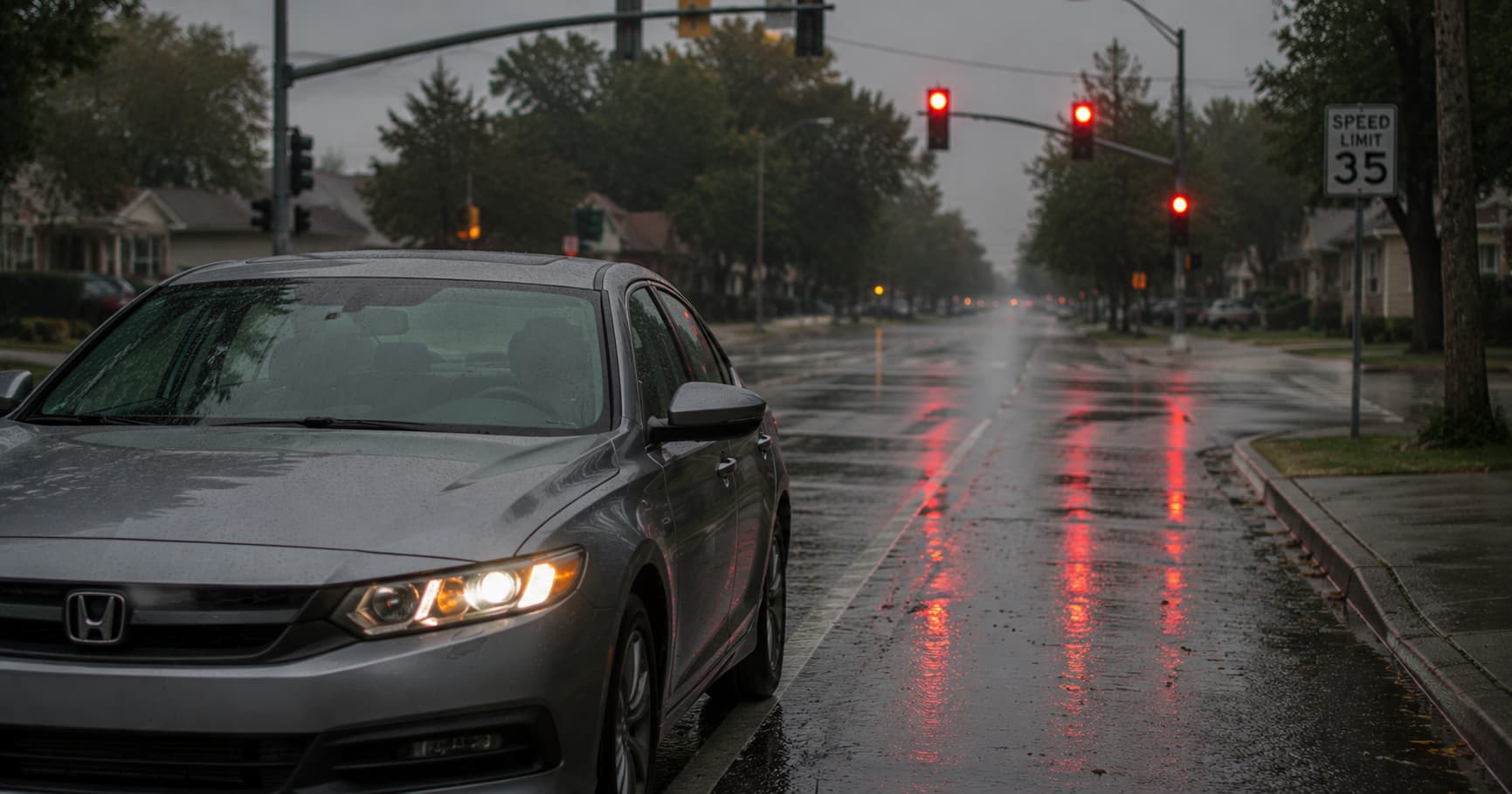
McKnight and McKnight's landmark analysis of more than 2,000 teen crashes found that speed too fast for conditions was implicated in roughly 21% of cases. Importantly, this wasn't speeding in the traditional sense — it was failing to adjust speed appropriately for the situation. Driving 40 mph on a dry highway is safe. Driving 40 mph on the same road in a sudden downpour is a speed management failure, even if it's technically under the limit.
Why Teens Struggle With Speed Specifically
Understanding why teens struggle with speed management is the key to coaching it effectively. There are two distinct forces at work — one neurological, one situational.
The brain development piece. Adolescent brain development follows an uneven timeline. The brain's reward-sensitivity system — which responds to the feel of acceleration, the social pressure of keeping up with traffic, the excitement of merging onto a highway — matures earlier than the cognitive-control system responsible for regulating those impulses. Researchers call this the "dual systems model," and it explains why a teen who fully understands the danger of speeding can still find themselves driving too fast ten minutes later. It's not a character flaw. It's a developmental pattern that responds to deliberate practice and consistent feedback — exactly what the supervised driving period is designed to provide.
The situational piece. Beyond brain development, new drivers face a cognitive bandwidth problem. Basic vehicle control — steering, braking, checking mirrors, staying in lane — still requires conscious effort for a novice. This leaves less mental capacity available for monitoring speed continuously alongside everything else. Experienced drivers manage speed automatically, as part of a background process. Teen drivers have to think about it actively, and when other demands compete for attention, speed regulation is often the first thing that slips.
This is why how to stop your teen from speeding isn't about repetition alone — it's about making speed a verbalized, conscious habit until it becomes automatic. The parent's role during supervised practice is to accelerate that process.
How to Practice Speed Management on Your Next Drive
Speed management is one of the most coachable skills in teen driving — but it requires specific, targeted practice rather than general reminders. Here's what works.
Make speed choices verbal. After each drive, pick one specific speed decision and discuss it. "Why did you choose that speed leaving the school zone?" or "What made you slow down before that intersection?" The goal isn't to catch mistakes — it's to make speed a decision your teen can articulate, not just react to. Over time, they'll start narrating these choices on their own. That's the signal the skill is taking hold.
Practice in varied conditions deliberately. A teen who has only practiced speed management on familiar suburban streets in good weather has a narrow skill set. Plan supervised drives that include highway merges, construction zones, school zones at different times of day, and wet or low-visibility conditions. Each new environment is a new speed management challenge — and meeting it for the first time with you in the passenger seat is far safer than encountering it alone.
Use the speedometer as a teaching tool, not a monitoring device. Instead of watching the speedometer yourself and correcting when your teen goes over, ask them to narrate what the appropriate speed is before they reach each zone. "What speed should we be doing through here?" makes it a forward-looking judgment, not a reactive correction.
Connect speed to stopping distance explicitly. Most teens know speeding is dangerous in the abstract. Few have truly internalized why. Try this: on a quiet road, have your teen drive at 30 mph and brake to a full stop at a marked point. Then repeat it at 40 mph from the same starting mark. The physical experience of the difference in stopping distance is more persuasive than any statistic — and it tends to stick.
What Good Speed Management Actually Looks Like
It's worth being specific about what you're looking for during a supervised drive, because "not speeding" and "good speed management" are genuinely different things.
A teen who is genuinely developing this skill will anticipate speed changes before reaching a zone rather than reacting after entering it, adjust speed proactively for weather and visibility without being reminded, maintain a consistent speed on highways without gradual drift upward, and decelerate smoothly coming off a highway rather than braking hard at the last moment. If your teen is doing most of these without prompting, speed management is developing well. If reminders are still needed regularly after many sessions, the practice conditions need to vary more — not just more miles driven, but more targeted feedback on specific moments in more demanding environments.
Parent Tip Summary
These are the most effective speed management coaching habits to build into your supervised drives.
Before the drive: Set a specific speed focus for the session. "Today I want you to narrate every time the speed limit changes before you reach it."
During the drive: When you notice a speed issue, ask a question rather than giving a correction. "What speed do you think we should be doing right now?" keeps your teen thinking actively rather than just reacting to your input.
After the drive: Pick one speed moment — good or bad — and discuss it specifically. Avoid general feedback like "you were going too fast." Instead try: "When we came off the highway onto the exit ramp, you were still doing 55 — what would have been the right speed there?"
Over multiple sessions: Track whether speed reminders are decreasing. If your teen needed three corrections on the first five drives and is now needing one, that's genuine skill development. If the number isn't changing, vary the conditions — not just the frequency of drives. Parents who rate Speed Management through the Drive Readiness Score™ after each drive naturally start to see this pattern emerge — a score that keeps climbing tells you the coaching is working; one that stays flat tells you it's time to change the environment.

How Drivvy Helps With Speed Management
Most teen driving log apps tell you when your teen drove and for how long. They don't tell you whether speed management is actually improving.
Drivvy's Drive Readiness Score™ includes Speed Management as one of its seven evaluated pillars — weighted at 20 points out of 100, reflecting its status as one of the two largest contributors to teen crash risk in decades of research. After each supervised drive, you rate your teen's speed management on a simple slider from "required active coaching" to "fully independent." Over multiple sessions, those ratings build a clear picture: is this skill developing, plateauing, or still needing focused work?
The teen driving log captures every session alongside the skill rating, so you can see whether the intentional coaching conversations you're having are translating into real improvement — or whether it's time to change the approach. Hours tell you how long your teen has been in the car. The Drive Readiness Score™ tells you whether the skills are actually moving.
If you want to understand the full research behind why Speed Management carries the weight it does in the DRS framework, The Science Behind the Drive Readiness Score™ covers the crash data and peer-reviewed studies in detail.
The Bottom Line
Speed management is the teen driving skill that looks simple from the outside and turns out to be one of the hardest to build. Speed management is an active, continuous judgment that adapts to every condition on the road — not a rule to consult and forget.
The good news is that it responds directly to deliberate practice and specific feedback. Every supervised drive is an opportunity to make speed a conscious, discussable decision — and every one of those conversations moves your teen a little closer to the point where it becomes genuinely automatic.
That's what teen smart driving actually looks like in practice: not a teen who never speeds, but a teen who has genuinely learned to read the road and regulate their speed without being reminded. It's a skill worth building carefully — because the first time they're doing it alone, you won't be there to catch it.
Want to go deeper on the research behind Speed Management and all seven driving skills? The Science Behind the Drive Readiness Score™ covers the crash data and behavioral research that shaped the DRS framework — written for parents who want to understand not just what to look for, but why it matters.