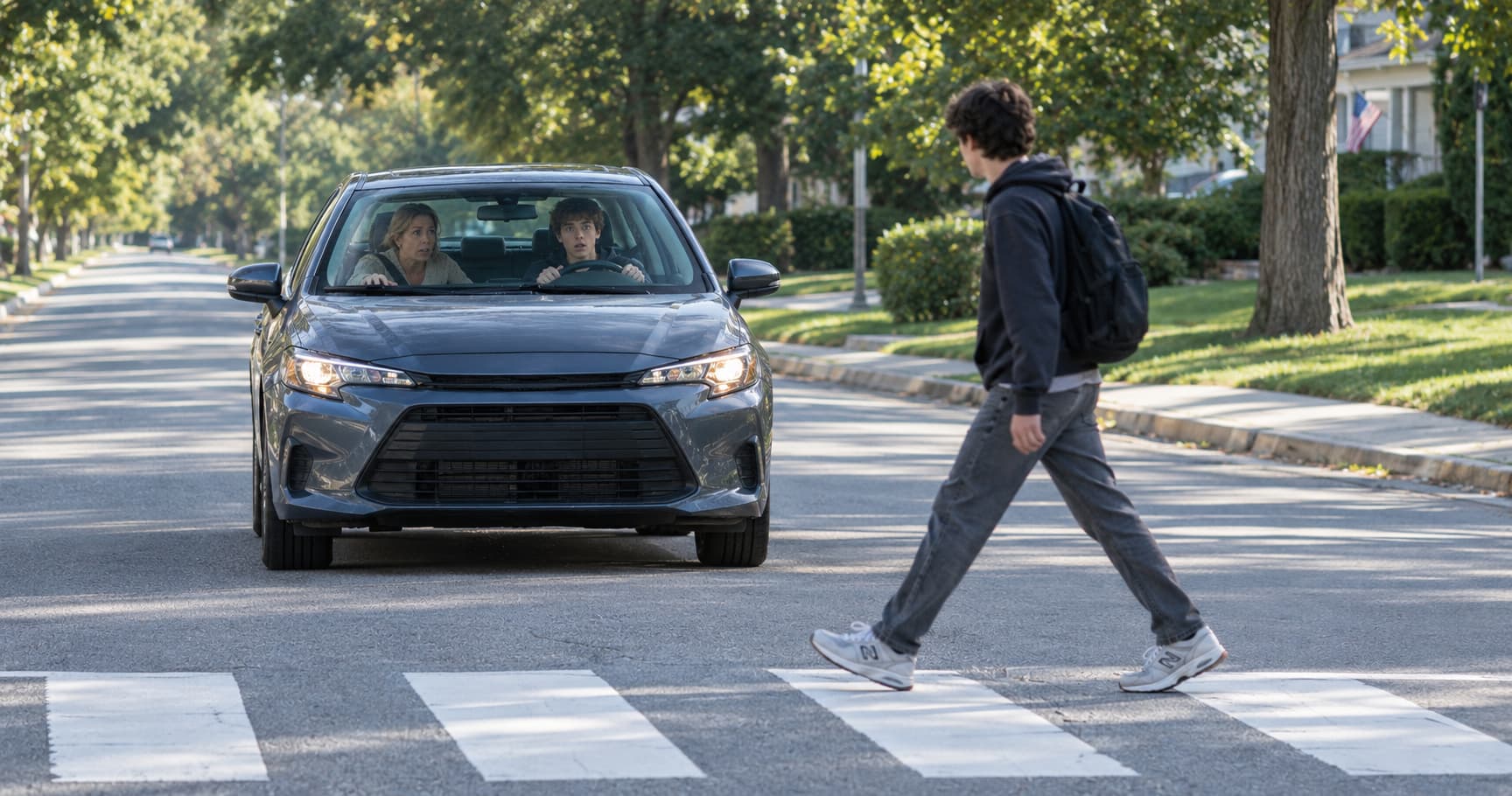
Your teen is driving well. Hands steady, speed fine, lane position good. Then a car door swings open ahead, or a pedestrian steps out from between two parked cars, and you hit the imaginary brake on the passenger side a full second before your teen reacts. Afterward they say the thing every parent has heard: "I didn't see it."
They're telling the truth. And that's the part worth paying attention to. Your teen's eyes work fine, and there's nothing wrong with their reflexes. What they don't have yet is the habit of looking in the right place before something happens. That habit has a name — hazard awareness — and it turns out to be one of the most important skills separating new drivers from experienced ones.
Why Hazard Awareness Is the Skill Parents Rarely Think About
Ask parents what causes teen crashes and most will say speeding or phones. Both matter. But when researchers look at what actually went wrong in the moments before a crash, another answer keeps showing up: where the driver was looking.
McKnight and McKnight's landmark analysis of more than 2,000 non-fatal crashes involving 16–19-year-old drivers found that inadequate visual search played a part in roughly 43% of them — the most common error in the study, ahead of attention failures (about 23%) and driving too fast for conditions (about 21%).
Research from the Children's Hospital of Philadelphia reached a similar conclusion from a different direction. Looking at serious crashes caused by a critical teen driver error, 21% came down specifically to a lack of scanning — the driver simply didn't look for the hazard in time to respond. CHOP names failure to scan as one of three "critical errors" that together account for nearly half of all serious teen crashes.
This is a core part of teen smart driving. A teen can hold a perfect speed and keep the phone in the glove box, and still be at risk if they aren't seeing what's developing around them. And unlike a speedometer creeping up, a missed hazard is invisible from the passenger seat — unless you know what to look for.
It's Not Reaction Time: What the Research Says
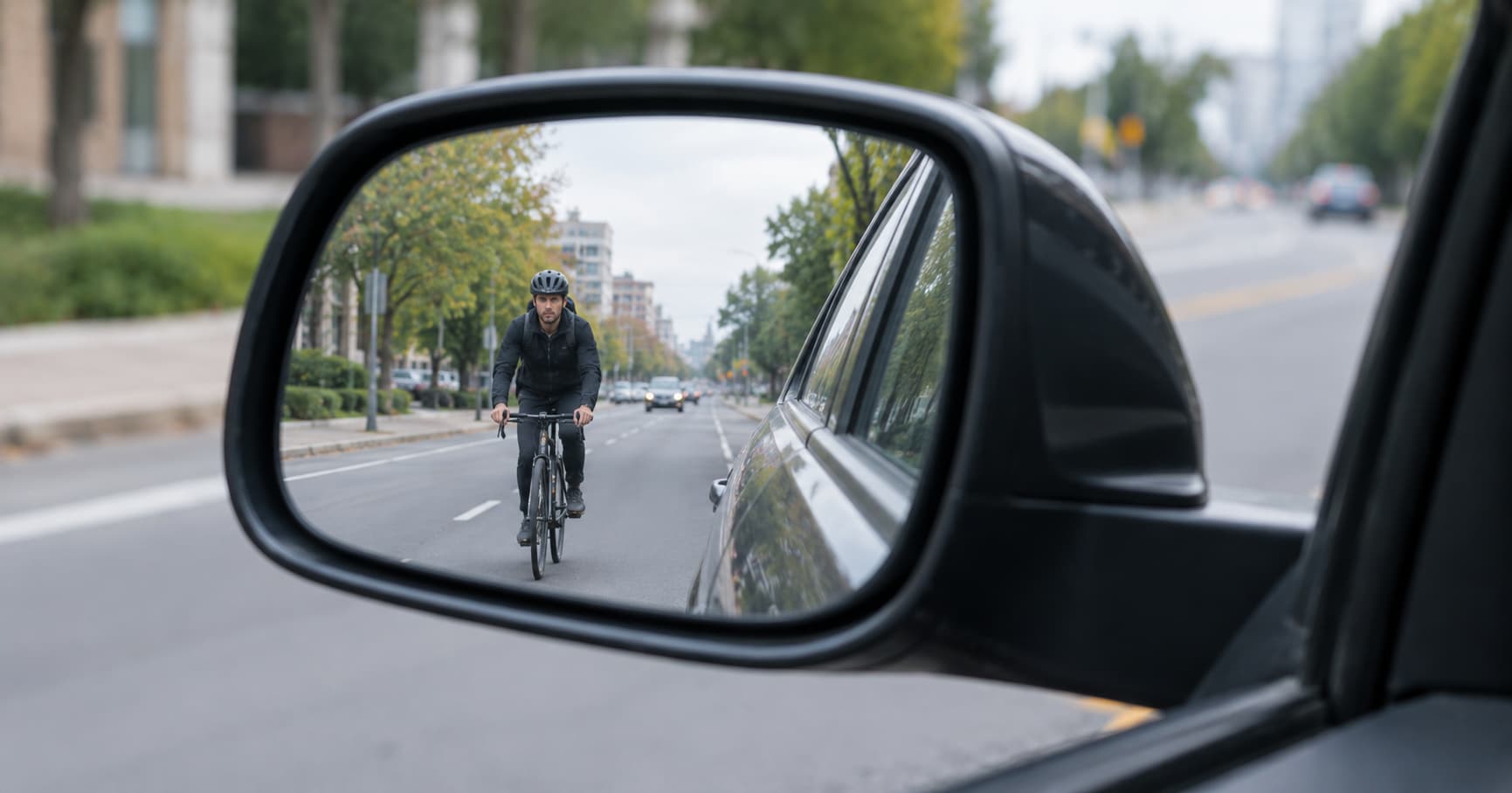
Most parents assume their teen needs to react faster. The research points somewhere else. The problem isn't reflexes — it's that new drivers often fail to look in the right place at the right time.
Eye-tracking studies make this visible. Novice drivers fixate on a narrower portion of the roadway than experienced drivers do, and they are significantly less likely to glance toward the places where hazards tend to appear: a crosswalk hidden behind a parked truck, an intersection with restricted sightlines, a side street where a car might pull out.
Experienced drivers do something researchers call anticipatory scanning. They predict where a hazard is likely to emerge and look there before anything happens. You do this without thinking — you see a ball roll into the street and your eyes go straight to the gap between the parked cars. New drivers tend to scan reactively and narrowly, and often miss threats at the edges entirely until those threats can't be avoided.
Here's the encouraging part. Anticipatory scanning is a learned habit, not an innate ability, and it can be taught. Training programs built around hazard anticipation have produced measurable, lasting improvements in novice drivers, with effects persisting up to six months after training. If a short training program can move this skill, so can a parent who coaches it deliberately across months of supervised driving.
Why Teens Struggle to See Hazards Early
For a new driver, the basics still take conscious effort. Steering, braking, checking mirrors, staying centered in the lane — every one of these demands attention that an experienced driver no longer has to spend. That leaves less mental bandwidth for watching the wider environment.
So a teen's attention narrows to what feels most urgent: the car directly ahead and the lane lines. It isn't carelessness. Researchers describe teen drivers as "clueless, not careless" — the errors come from skills that haven't developed yet, not from attitude.
As the mechanics of driving become automatic, attention frees up for hazard detection. But there's a catch. Scanning improves with deliberate, varied practice — and only if your teen is consciously building the habit. A teen who drives the same quiet routes week after week can log plenty of hours without ever being asked to look further than the bumper in front of them. This is why how to teach a teen to drive well has less to do with adding miles and more to do with what those miles demand.
How to Practice Hazard Awareness on Your Next Drive
Hazard awareness is highly coachable, but "pay attention" and "watch out" won't build it. Those tell your teen something is wrong without telling them where to look. Here's what works.
Narrate what you see. In early practice drives, say your own scanning out loud. "See how that car's brake lights came on early?" "Watch the cyclist on the right." "That van is blocking our view of the crosswalk." You're lending your teen your eyes — showing them what an experienced driver notices and when.
Then flip it. After a few sessions, ask your teen to point out hazards before you do. Make it a quiet running commentary rather than a quiz. When your teen starts noticing things you missed, the skill is taking hold.
Ask "what could happen here?" Approaching an intersection, a row of parked cars, or a driveway hidden by a hedge, ask your teen what might come out of it. This is anticipatory scanning in practice: looking at where a hazard could appear, not waiting for one to show up.
Make mirrors and blind spots visible. Ask your teen to say "mirror" or "blind spot" aloud when they check. It feels awkward for a drive or two, and it lets you confirm that a check you can't easily see is actually happening before every lane change and turn.
Change the scenery. A familiar neighborhood has familiar hazards. Plan supervised drives through busier streets, school zones at pickup time, parking lots, and intersections where the view is partly blocked. Each new environment asks your teen to look in new places.
What Good Hazard Awareness Actually Looks Like
It helps to be specific about what you're watching for, because "didn't hit anything" and "good hazard awareness" are different things.
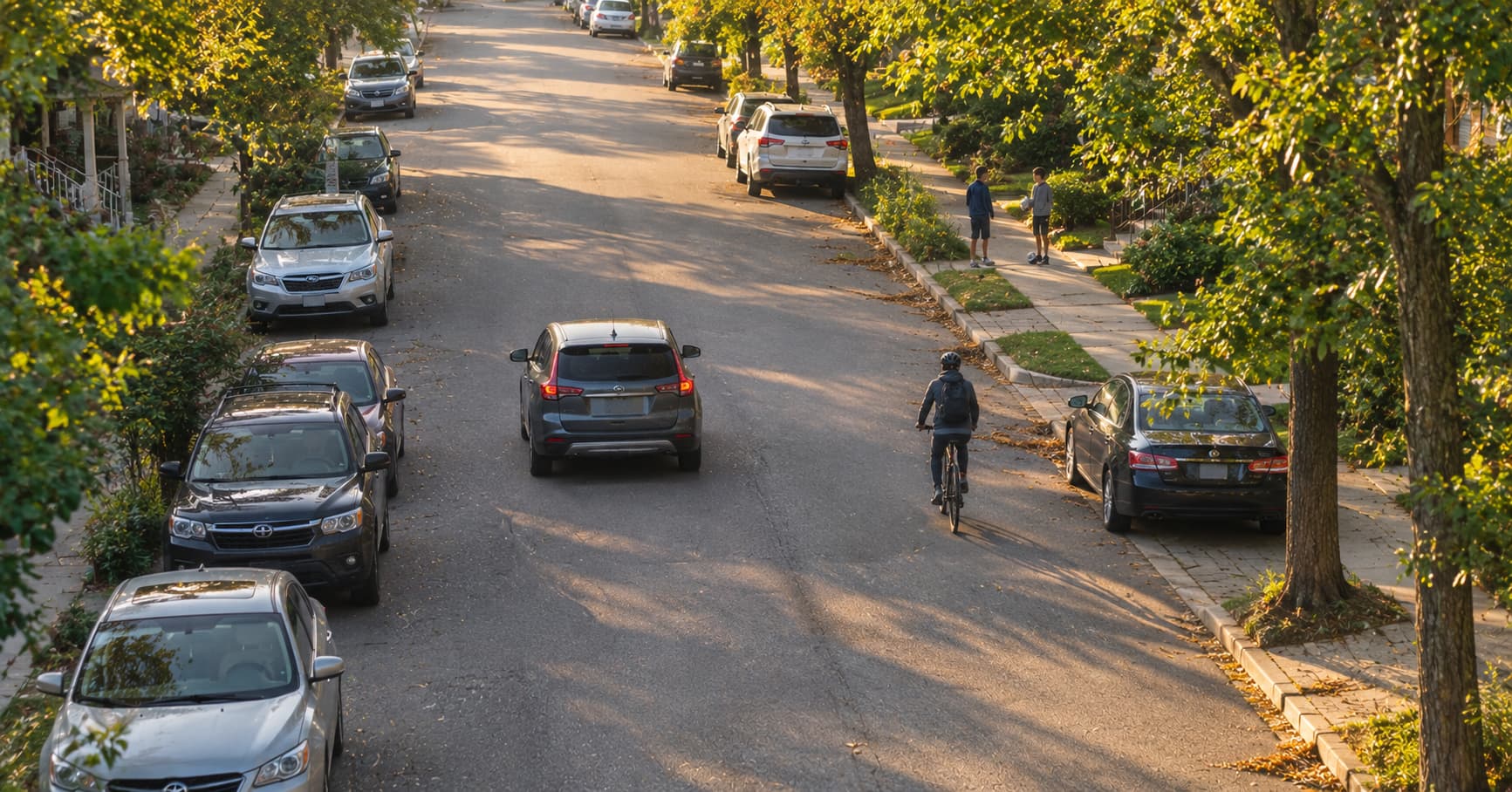
A teen who is developing this skill keeps their eyes moving rather than locked on the car ahead. They ease off the gas before a problem fully develops, instead of braking hard once it has. They check mirrors and blind spots without being reminded. They notice pedestrians, cyclists, and cars waiting at side streets — and sometimes mention them. They slow down when their view is blocked, because they understand that what they can't see is part of the picture.
The warning signs are the reverse: late, hard braking; surprise at things you saw coming well in advance; a fixed stare straight ahead; lane changes that begin before the check does. If you're still calling out hazards on most drives after many sessions, more hours on the same roads won't fix it. More varied roads and more specific feedback will.
Parent Tip Summary
These are the most effective hazard awareness coaching habits to build into your supervised drives.
Before the drive: Set one scanning focus for the session. "Today I want you to tell me about every pedestrian and cyclist you see before we reach them."
During the drive: Point out hazards early and calmly, well before they become urgent. Where you can, ask instead of tell: "What are you watching for at this intersection?"
After the drive: Pick one hazard moment — good or bad — and talk through it specifically. Skip "you need to pay more attention." Try: "When that car pulled out of the side street, when did you first see it? What could have tipped you off sooner?"
Over multiple sessions: Track who spots hazards first. If you were calling out most of them in the first few drives and your teen is now beating you to it, that's real skill development. Parents who rate Hazard Awareness through the Drive Readiness Score™ after each drive see this pattern emerge on its own — a score that keeps climbing tells you the coaching is working; one that stays flat tells you it's time to change the environment.
How Drivvy Helps With Hazard Awareness
Most teen driving log apps record when your teen drove and for how long. They can't tell you whether your teen is seeing more of the road than they were a month ago.
Drivvy's Drive Readiness Score™ includes Hazard Awareness as one of its seven evaluated pillars — weighted at 20 points out of 100, reflecting how consistently scanning failures appear in decades of teen crash research. After each supervised drive, you rate your teen's hazard awareness on a simple slider from "required active coaching" to "fully independent." Over multiple sessions, those ratings show whether the skill is developing, plateauing, or still needs focused work.
The supervised driving log captures every session alongside the rating, so you can see whether the scanning habits you're coaching are turning into real improvement. Hours tell you how long your teen has been in the car. The Drive Readiness Score™ tells you whether they're learning to see what's coming.
If you want the full research behind why Hazard Awareness carries the weight it does, The Science Behind the Drive Readiness Score™ covers the crash data and peer-reviewed studies in detail.
The Bottom Line
When your teen says "I didn't see it," believe them — and treat it as the most useful piece of feedback the drive produced. They aren't slow and they aren't careless. They haven't yet learned where to look.
That's a skill you can build. Narrate what you see, ask your teen to do the same, and keep widening the range of roads you practice on. Each drive adds to the set of situations your teen recognizes before they turn into problems.
A big part of teen smart driving is the ability to see trouble early enough that it never becomes an emergency. It's worth building patiently now, while you're still in the passenger seat to point out what they missed — because soon they'll be scanning that road alone.
Want to go deeper on the research behind Hazard Awareness and all seven driving skills? The Science Behind the Drive Readiness Score™ covers the crash data and behavioral research that shaped the DRS framework — written for parents who want to understand not just what to look for, but why it matters.